International precedents: when ‘temporary’ protection can start counting toward permanence. Regularly updated.
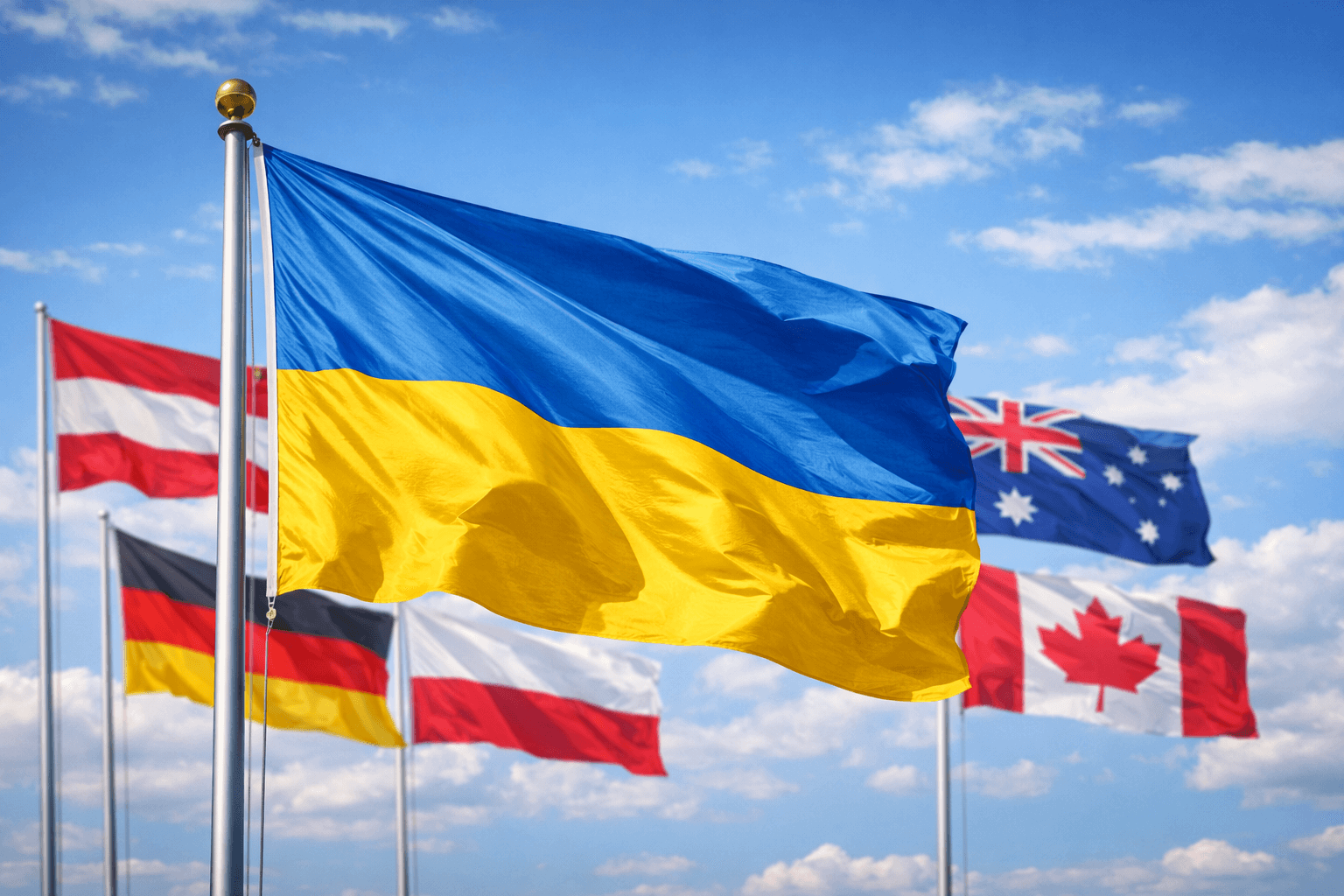
Many Ukrainians in the UK are working, paying taxes, and building lives — yet remain on time-limited permission with no dedicated route to settlement.
Other countries have already started building “earned stability” mechanisms: if people are economically self-sufficient and integrated, they can access longer residence — and in some cases time under temporary protection starts counting (fully or partially) toward a durable status.
Below are a few clear, well-documented examples.
Austria: a work-based route and time that can count
Vienna’s guidance explains a Red-White-Red Card plus for displaced persons from Ukraine, with eligibility linked to holding a displaced-person ID and having been gainfully employed / insured (a work-and-contributions framing). It also states that after five years, the calculation for “Permanent Residence – EU” can include time spent with the displaced-person ID card.
Read: Stadt Wien – RWR Card Plus for displaced persons from Ukraine
Czech Republic: a “special long-term residence” + partial counting
Czechia introduced a special long-term residence option (Lex Ukrajina 7) aimed at economically self-sufficient holders of temporary protection, issued for 5 years. It also explicitly provides that for permanent residence purposes, time on temporary protection counts at 50% (it counts, but only half).
Read: Czech MOI – Lex Ukrajina 7 | IPC – Zvláštní dlouhodobý pobyt | Czech Parliament – legal text (t0727a0)
Poland: a longer (3-year) residence horizon — and time that counts toward long-term residence
Poland’s legal changes introduce a temporary residence card valid for 3 years (CUKR) for eligible Ukrainians under the special act framework, reducing the churn of short renewals. Importantly, Poland’s official guidance explicitly states that time spent in Poland on the basis of the CUKR residence card will be counted toward the period required to obtain an EU long-term resident permit. Read: Poland – Dziennik Ustaw (2025 poz. 337) | Poland – Senat/Sejm print (342)
Germany: counting §24 residence time (citizenship context) + stability guidance
Guidance notes that residence under §24 AufenthG can be treated as lawful residence time in the context of later acquiring German citizenship (subject to conditions), and provides practical clarification around switching/transition questions.
Read: RefugeesConnect – counting §24 periods | RefugeesConnect – official clarification on switching from §24
Australia: a permanent-visa option for eligible Ukrainians (Resolution of Status)
Australia has a documented pathway for eligible Ukrainians via a permanent visa (Resolution of Status, Subclass 851).
Read: RAILS – Subclass 851 (PDF)
Canada: pressure for a PR pathway (policy debate)
In Canada, Ukrainian community organisations and policymakers have publicly called for a pathway to permanent residency for displaced Ukrainians.
Read: UCC – Dec 17, 2025 statement
Employment: the UK is in the top three for Ukrainian employment rates
OECD data shows high labour-market participation by displaced Ukrainians across multiple host countries. On page 64 of the OECD International Migration Outlook 2025, the report notes that in 2024 Poland (78%), Lithuania (72%) and the United Kingdom (69%) recorded the highest employment rates, while Czechia, Denmark, Estonia and the Netherlands also reported rates close to or exceeding 60%.
Read: OECD – International Migration Outlook 2025 (PDF)
By contrast, even where employment rates are below the UK’s 69%, governments have still put clearer “earned stability” bridges on the table — linking longer status to work/self-sufficiency, allowing time under temporary protection to count (fully or partially), extending residence horizons to multiple years, or openly debating a PR pathway.
Why this matters for the UK
Looking across international approaches, the practical question is consistent: what happens when “temporary” protection lasts for years and people build lives in the host country? In the UK context, this is especially visible because time on Ukraine schemes is currently treated for long-residence purposes alongside short-term routes like Visitor, Short-term Student (English language) and Seasonal Worker — even though, in everyday reality, Ukraine permission enables the kinds of work-and-life participation more commonly associated with longer-term routes that do lead somewhere. Many systems respond to this “long temporary” reality with some form of earned stability — clear criteria, a predictable timeline, and a durable endpoint (long-term residence or permanent status). In that spirit, it would be logical for the UK to consider counting time spent on Ukraine schemes toward long residence, or/and offering a dedicated, contribution-based ILR route for those who meet transparent requirements.
Note: any “earned” route should be complemented by separate provisions for disabled people, carers, older people and other vulnerable groups, for whom labour-market thresholds are not an appropriate test of integration.
Sources: OECD – International Migration Outlook 2025 (employment rates quote; PDF p.64) | OECD – PDF download | Stadt Wien – RWR Card Plus for displaced persons from Ukraine | Czech MOI – Lex Ukrajina 7 | Czech Parliament – legal text (t0727a0) | Poland – Dziennik Ustaw (2025 poz. 337) | Poland – Senat/Sejm print (342) | Australia – RAILS Subclass 851 briefing (PDF) | Canada – UCC statement (Dec 17, 2025)